About Us
Home / About Us
At Young Leaders, we believe every child has the potential to become a confident, creative, and responsible leader of tomorrow. Designed for ages 5–12, our programs combine hands-on learning, real-world experiences, and skill-building activities to nurture curiosity, creativity, and leadership.
Through interactive workshops, outdoor adventures, creative arts, public speaking, life skills, and experiential learning, we empower children to explore, experiment, and grow beyond the classroom. Each experience strengthens self-confidence, teamwork, problem-solving, and emotional intelligence, preparing them to face future challenges with resilience and imagination.
Our mission is to build a vibrant community of young learners who are not only academically capable but also socially aware, empathetic, and ready to lead with integrity.
Join us to unlock your child’s potential and shape the leaders of tomorrow — today.
At Young Leaders, we help children develop the real-world skills that schools don’t teach — through experiential learning, hands-on workshops, and leadership labs designed for ages 5–12.
We don’t just prepare children for exams — we prepare them for life. Our programs are rooted in active participation, discovery, and practical application of essential skills.
We Nurture:
- Confidence & Communication
- Leadership & Decision-Making
- Teamwork & Collaboration
- Creativity & Problem-Solving
- Emotional Intelligence & Awareness
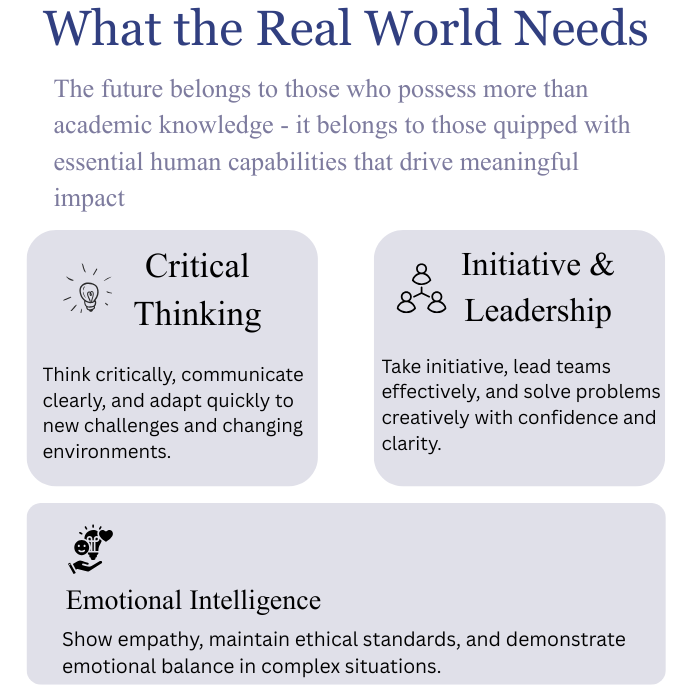
Why Experiential Learning Matters
Because today’s children are growing up in a world that demands more than marks. They need skills, mindset, and confidence to navigate real challenges and thrive in an unpredictable future.
The Expression Gap
Most kids can recite answers — but hesitate to express ideas, ask questions, or share their unique perspectives in real situations.
Academic-Heavy Focus
Schools are academic-heavy, leaving little space for life skills, creative exploration, or personal development that builds character.
Evolving World
The world is evolving faster than traditional education — demanding adaptability, innovation, and human-centered skills from the next generation.
